

In critical industrial applications where leakage risks are catastrophic, Ring Joint Gaskets (RTJ) stand as the gold standard for high-pressure, high-temperature sealing. Engineered for API flanges and extreme service conditions, this metal gasket technology dominates oil & gas, power generation, and petrochemical sectors, delivering unmatched reliability for mission-critical fluid handling systems.
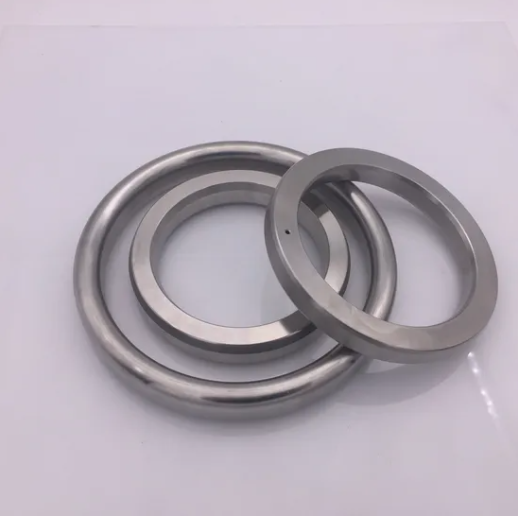
RTJ gaskets’ superior performance stems from their unique design and material composition. Crafted from soft iron or stainless steel, they leverage elliptical or octagonal cross-sections that deform plastically under bolt preload, creating a metal-to-metal seal capable of withstanding pressures up to 100MPa and temperatures ranging from -196°C to 815°C . Unlike spiral wound gaskets (limited to 42MPa) and flat gaskets (prone to creep at high temps), RTJs maintain integrity in rapid temperature fluctuations and corrosive media, making them ideal for hydrogen pipelines, and power plant steam systems . Their leak-tight seal—critical for toxic or flammable fluids—outperforms composite gaskets by eliminating compression relaxation over time.
Key applications span high-stakes industrial processes: offshore oil rig pipelines, refinery distillation columns, nuclear power plant heat exchangers, and chemical reactor flanges. They capture over 60% of the high-pressure sealing market, as spiral wound gaskets fail in cyclic pressure environments and rubber seals degrade above 230°C . For API 6A flanges in oil & gas exploration, RTJs are mandatory due to their ability to withstand extreme wellhead pressures.
While RTJs carry a higher upfront cost than non-metallic gaskets, their longevity (5–8 years vs. 1–2 years for spiral wound variants) and zero-leakage guarantee reduce total ownership costs. Unlike gaskets that require precise alignment, RTJs accommodate minor flange imperfections, simplifying installation . Modern formulations, including Inconel alloys for ultra-high temps, further expand their versatility.